Creative Strategy | 2026-05-26 | 5 min read
In 2011, Ferrari's CEO said: "You will never see an electric Ferrari."
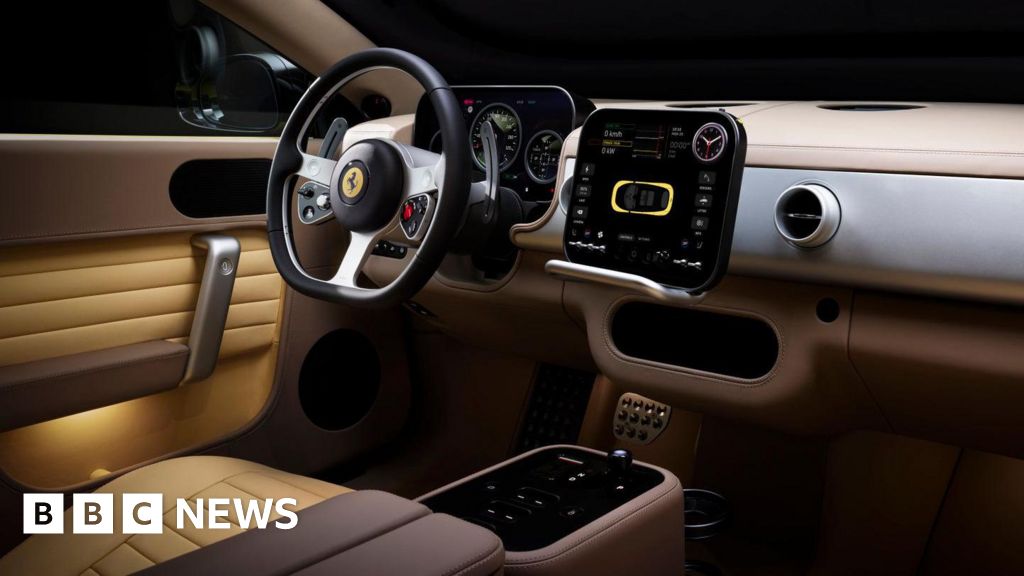
In 2026, Ferrari unveiled the Luce, its first fully electric car and its first Ferrari with five seats.
That shift is bigger than a product update. It is a brand stepping into new technology while carrying decades of emotion, expectation, and pressure.
I watched the conversation around the launch, and the real story is not just about the car. It is about how creative work changes when innovation removes an old constraint.
Cover image credit: Ferrari via BBC News.
The blank slate no one expected
A combustion engine shapes the structure of a car. It affects the floor, the cabin, the sound, the weight, and the feeling people expect from the brand. When that engine disappears, the designer is not simply replacing one part with another. The designer is working with a new canvas.
That is why the Ferrari Luce caught my attention. The interesting part is not only that it is electric. The interesting part is that Ferrari had to ask a harder creative question: what should Ferrari feel like when one of its most familiar emotional cues is gone?
This is where innovation becomes a creative test. New technology does not automatically make something better. It only creates space. What you do with that space is the real work.
"The capability of transforming constraints into opportunities." Flavio Manzoni, Ferrari Chief Designer
Authenticity over imitation
When you remove an engine, you lose the roar, the vibration, and the mechanical drama people expect from Ferrari. The safe move would be to fake the old feeling and pretend the medium has not changed.
The stronger move is to protect the core emotion while letting the expression evolve. That is the part every creative person understands. A brand can change its tools, formats, channels, and production methods, but it cannot lose the reason people cared about it in the first place.
Why this connects to my work
I think about this constantly in branding, content strategy, social media work, video editing, and AI assisted creative workflows. A new tool can remove friction, speed up production, and open creative options that were not practical before. But speed alone is not innovation.
The real value comes from knowing what to keep and what to rethink. In my work, AI can help with research, prompts, content variations, image direction, drafts, and workflow systems. But the final direction still needs taste, clarity, brand understanding, and human judgement.
That is the same lesson I take from Ferrari here. Innovation is not about abandoning identity. It is about having enough confidence in the identity to let the execution change.
The lesson for brands and creators
Every brand eventually reaches a moment where the old format stops being the only option. The platform changes. The audience changes. The tools change. The production cycle changes. At that point, repeating the old formula can feel safe, but it can also make the work feel disconnected from the moment.
Creative risk is not recklessness. It is the discipline to protect what matters while rethinking what no longer serves the work.
That is why the Ferrari Luce is useful as a creative case study. Whether people love it or question it, the decision shows a brand testing the edge of its own identity. That is where meaningful creative progress usually begins.
For me, that is the connection between Ferrari, innovation, and the work I do with brands. The goal is not to chase newness for attention. The goal is to use new tools and new constraints to create work that still feels clear, intentional, and unmistakably on brand.